What is Somatic Trauma Therapy?

background

Somatic trauma therapy is a therapeutic approach that seeks to identify and address bodily and sensory responses related to past traumatic experiences.


Through this perspective, it is understood that trauma is stored in the body and can manifest in the form of muscular tensions, dysfunctional physiological and emotional responses.


These physical and sensory manifestations of trauma are seen as coping mechanisms that were activated in times of overwhelming stress and could not be discharged at the time.


The aim of Somatic Trauma Therapy is to help the person recognize, release and reintegrate these dysfunctional somatic responses, allowing for a more complete recovery and a higher quality of life.
background
background

“Trauma is not what happens to you, but what happens inside you as a result of what happens to you.”

Gabor Maté ​

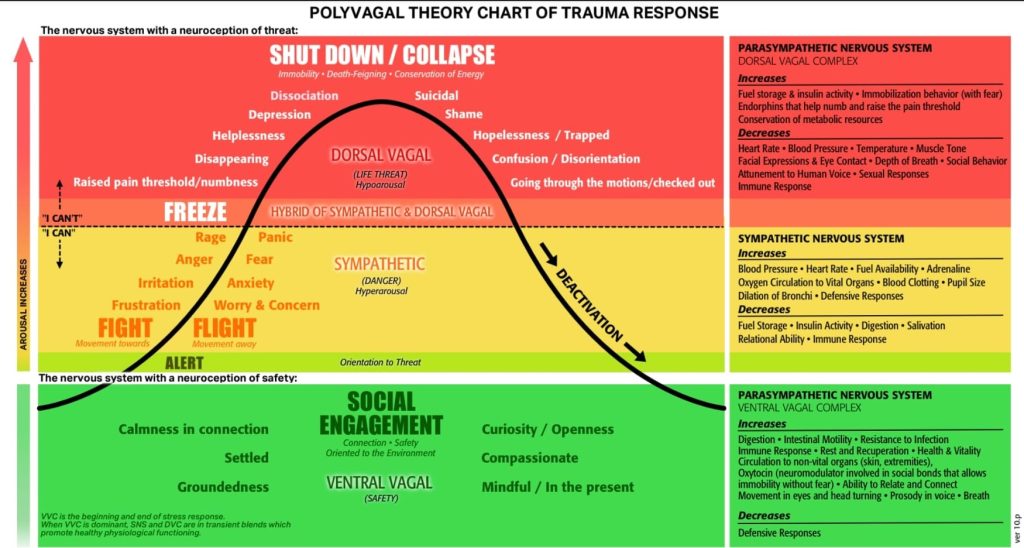
In Somatic Trauma Therapy, regulation of the nervous system is fundamental.

Trauma, in its various forms, can overload and dysregulate the nervous system, leaving the person trapped in chronic fight or flight responses or in a frozen state.

These imbalances can manifest in a wide range of symptoms, such as anxiety, hyper-vigilance, insomnia, nightmares, chronic pain, and overwhelming emotional responses.


Regulation of the nervous system allows a person to feel safer in their body and in the world, which is essential for processing trauma.

As the activation of the sympathetic nervous system (fight/flight) is reduced and the parasympathetic nervous system (rest and digest) is activated, people can begin to release the energy trapped in chronic stress responses and address the roots of trauma more effectively.


This is achieved by using the Somatic ‘Felt Sense’. Essentially ‘feeling’ sensations from your body, and allowing the therapist to help you navigate what your body allows to come up at any time.

background

These can be tricky to articulate, but practicing describing words for them can be fun.


Sensations vary, but can be things like density variations, flowy/swirly movements, blocks, patches of temperature change, waves of emotion, tingles, heaviness, twitches and many more..


All sessions are unique. Everybody will have their own personal experience of how somatics works for them.


It’s a practice that needs to be navigated with kindness, curiosity, and permission for you to get used to the therapy, allowing your system time to process in the time it needs to process it.


This varies from one person to another, from one ‘thing to be released’ and another. It’s part of the beauty of the work. It’s entirely organic. No drugs, nothing forced.


Re-regulation can include many characteristics that may seem odd, but are welcomed. Things like involuntary movements, sweating, emotional connection, tears, burping and even farting!

Please know these are all normal, to let them play out, and not feel you have to suppress any.

background

Somatic Fascia Release


Is a different pathway to try, but leads to the same ‘held’ things.

It’s a touch therapy, that involves skin on skin contact where we allow things to express via the fascia network.


You’ll be laying on the massage couch, and I will hold, pull and stretch you to gently connect with your fascia, and physically support it as it has an opportunity to let something go.


It’s also in Felt Sense, and you’ll be asked to communicate your bodily feedback to help us navigate what’s going on. You may also get the re-regulation signs that show in a Somatic Therapy session.


Working with Somatic Therapy, our primary route is via the nervous system.


Working with Fascia Release, our primary route is via the fascia.


Both are a gentle therapy that can lead to strong paths of re-regulation activity.

The important thing is to stay feeling safe. Stay curious and kind with yourself, and whatever comes up. Stay slow, keep telling me what’s going on, stick to navigating on the ‘edges’ of what we find, and we will get there!

background

Energy Therapy


A gentle, intuitive, and broad approach to healing where energetic shifts can be made. Especially useful in times of turmoil and stress, energy work can help people feel centred, less scattered, and more ‘together’.


This work can be used as a stand alone treatment. But I often blend it with my Somatic work.

It’s a very helpful and gentle way to help people process as they work on adjusting to the ‘unburdening’ of trauma the Somatic work allows.


In a typical session, you will lay face up on the couch. This isn’t a skin on skin therapy, no need to undress, but there may be touch involved.


Please always say if touch feels uncomfortable for you in any way, so we can accommodate.


As with all my work, communication between us is important, and we will be checking in with each other throughout the session. It’s gentle and quiet work.


It can bring it’s own forms of release and unburdening. These have the same signs as the somatic work (things like tingles, twitches, yawns, temperature and emotional shifts).


All sessions are conducted slowly with communication throughout to work within your comfort. Being open to things shifting, moving and changing is important. Your body may take a while to allow things to change, working slowly and with patience is key.


Each time we work, we build flow and connection in the body.

background

Using Somatic Therapy as the core modality. Calling on Fascia work as we need to. Along with Energy Therapy woven in during the bumpier chapters of your healing journey. We can give you the most well rounded balance.


It’s very unusual for this combination of therapies to be offered together.


I use them like this because I know first hand that it can really help to have more than one tool in the box when you’re letting go of life long trauma.


My own Somatic Therapy journey has been very bumpy. I honestly felt so bad I wanted to quit. But the Energy Therapy literally pulled me back together, so I could function. I went from feeling scattered to centered. Allowing me to metabolize all the changes happening.


It’s not an easy ride.


There will be small bumps, big dips, highs, groggy patches and in general a feeling you’ve been dragged through a hedge backwards. This is because we are making foundational changes in your system. It’s big work.
A few things to know before you set off..